The Google algorithm update February 2026 has sent shockwaves through the SEO world and if your organic traffic dropped this month, you are not alone. On February 5, 2026, Google officially launched its first major core update of the year, targeting Google Discover and broader search engine rankings simultaneously.
This update reshaped how Google evaluates content quality, E-E-A-T signals, and user experience metrics across millions of websites. Whether you run a news blog, an affiliate site, or an e-commerce store, understanding this Google search algorithm shift is critical to protecting and growing your rankings in 2026.
What Changed in This Google Update
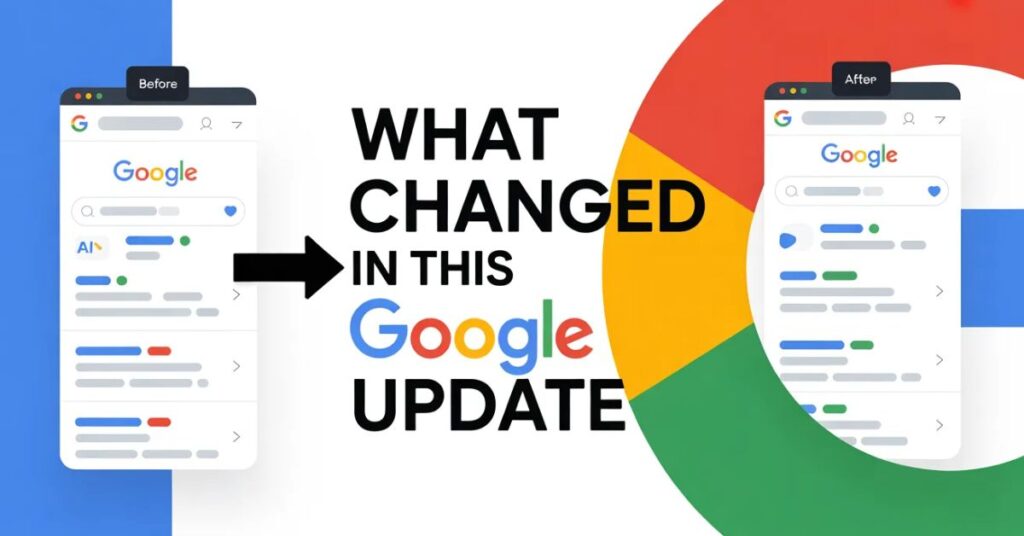
The Google algorithm update February 2026 is officially called the February 2026 Discover Core Update a historic first. It is the first time Google has rolled out a core-level update targeting Google Discover directly, making it a landmark SEO change 2026 webmasters cannot afford to ignore.
Google Search Central confirmed the rollout on February 5, 2026, describing it as “a broad update to our systems that surface articles in Discover.” The update began with English-language users in the United States, with a global rollout planned in the months ahead. A separate broad core update was also confirmed on February 1, 2026, further amplifying ranking volatility across SERPs worldwide.
Third-party tracking tools including SEMrush and Ahrefs measured search engine ranking volatility at a staggering 9.3 out of 10 during rollout, one of the highest readings in recent SEO history. The rollout timeline is expected to take up to two weeks to complete in the U.S., meaning some sites may still see fluctuating rankings as the Google update today continues to settle.
Confirmed Ranking Factor Changes
The Google algorithm update touched multiple Google ranking factors 2026 experts have been watching closely. Here is a breakdown of what changed and what it means for your SEO strategy.
AI Content Detection: New Signals Google has significantly upgraded its ability to detect low-effort, mass-produced AI content. Sites relying on lightly edited AI summaries or articles created primarily to “cover keywords” rather than serve real users are seeing clear organic traffic drops. AI content itself is not the issue unoriginal, low-differentiation content is. This aligns with Google’s multi-year helpful content update trajectory.
User Experience Metrics: Updated Thresholds Google updated its Core Web Vitals evaluation in 2026, with Interaction to Next Paint (INP) and scroll performance now carrying more weight in search engine rankings. Pages with high bounce rates and poor engagement signals are being re-evaluated at a system level. If users click your result and immediately return to the SERP (known as “pogo-sticking”), Google treats that as a negative quality signal.
E-E-A-T Standards: Stricter Requirements The Google algorithm update February 2026 introduced more granular E-E-A-T (Experience, Expertise, Authoritativeness, Trustworthiness) evaluation. Expertise is now assessed on a topic-by-topic basis rather than site-wide. A regional news publisher with a dedicated health section can demonstrate health expertise but a finance blog that published one health article would not. This topic-level analysis changes the content strategy for multi-niche publishers significantly.
Mobile-First Indexing: New Criteria Google’s mobile-first indexing standards were tightened in this update. Your mobile version is now the primary ranking signal poor mobile UX directly equals poor search engine rankings. For Google Discover specifically, large images (minimum 1,200 pixels wide) with max-image-preview settings enabled are now formally required for Discover eligibility.
Keyword Optimization: Semantic Search Rewarded This update reinforces that keyword optimization in 2026 is not about repetition it is about topical depth. Google’s AI models now reward varied vocabulary and clear topic coverage over exact-match keyword stuffing. Use your primary keyword in the H1, introduction, and key sections, then let related LSI keywords flow naturally throughout.
Industries Hit Hardest by the Update
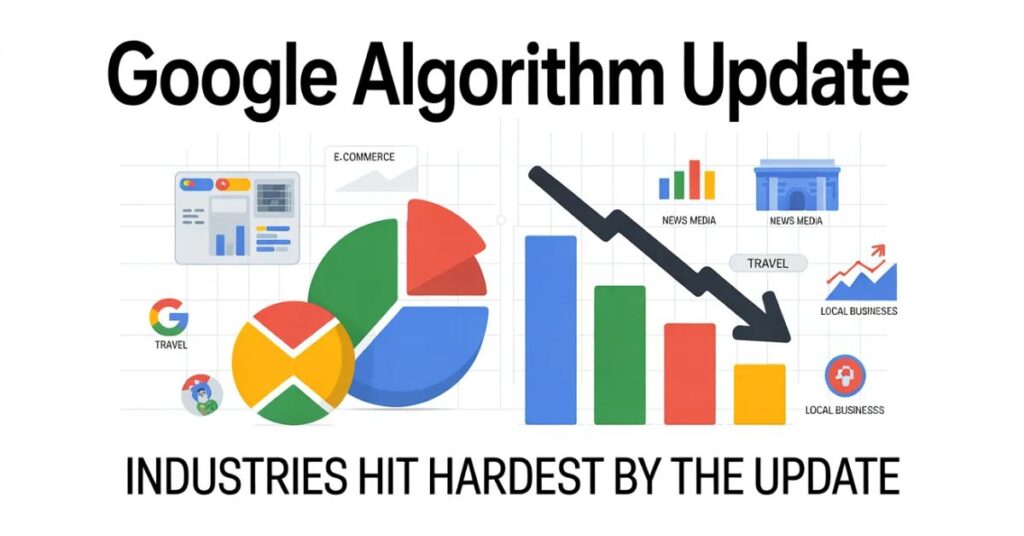
The Google algorithm update has not hit all industries equally. Publishers relying heavily on Google Discover for traffic have felt the sharpest impact, particularly entertainment sites, lifestyle blogs, and news aggregators that used sensational or clickbait-style headlines.
Affiliate content websites and AI-assisted content farms producing high volumes of thin articles have seen major organic traffic declines in standard Search as well. Sites that ranked well for informational queries without offering unique analysis, first-hand experience, or original research are being re-ranked downward.
The broader data context makes this even more urgent: Google Discover referrals to publishers had already declined 18% and search referrals 21% since May 2023. The SEO changes 2026 introduced in this update add fresh pressure to an already-challenged publishing landscape.
Winners: Sites That Gained Rankings
Not every site lost ground in the Google algorithm update . Local and regional news publishers, especially those covering community events and geographically relevant topics are seeing Discover gains as the update rewards in-country, locally relevant content.
Sites with deep topical authority structured around content hubs (also known as Hub and Spoke SEO) are outperforming broad-topic competitors. Publishers with strong backlink profiles, verified author credentials, proper schema markup, and consistent publication cadences are emerging as the clearest winners. The common thread: these sites are built for people first and search engines second which is precisely what Google’s helpful content update framework has long demanded.
How to Recover from This Google Update
If the Google algorithm update hurt your rankings, here is a clear recovery roadmap based on what SEO experts and Google’s own guidelines recommend.
Step 1: Audit Your Content Identify pages that lost rankings or Discover impressions using Google Search Console. For each page, ask honestly: does it provide genuine insight beyond what already exists? Consolidate or remove pages that add no unique value. Avoid mass deletions while the update is still rolling out historical data shows this often slows recovery.
Step 2: Check Technical SEO Run a full technical SEO audit using Screaming Frog or a similar crawler. Verify that high-value pages remain indexed, check page speed and Core Web Vitals (especially INP scores), and fix any crawlability issues. Technical SEO health is non-negotiable for maintaining search engine rankings in 2026.
Step 3: Improve E-E-A-T Signals Strengthen author bio pages with real credentials and publication history. Build out your About and Contact pages. For Discover, audit every headline and preview snippet eliminate exaggerated language and ensure every title accurately represents the article content.
Step 4: Monitor Analytics Track Google Search Console, Ahrefs, and SEMrush data daily during the rollout. Compare Discover traffic and organic Search traffic separately to isolate where the impact is greatest.
Step 5: Be Patient — 4 to 8 Weeks Google confirms that recovery from core updates takes weeks to months. Focus on sustainable quality improvements, not reactive quick fixes.
SEO Expert Reactions & Analysis
The SEO community’s reaction to the Google algorithm update has been immediate and clear-eyed. Analysts at Results Repeat confirmed the update is “cracking down on thin, low-value AI-generated content and rewarding sites that demonstrate true topical authority.” Their early data reinforces that this is a system-wide quality reassessment not a single-factor tweak.
SEO professionals tracking the update via Ahrefs and SEMrush flagged the 9.3/10 volatility score as one of the highest in recent memory. Many practitioners on LinkedIn cautioned against making large structural site changes during an active rollout, citing historical patterns where reactive changes increased volatility rather than resolving it.
The broader expert consensus: this Google search algorithm shift continues a multi-year arc toward helpful, people-first content and away from pages engineered primarily to game keyword rankings.
What to Do Right Now
Your immediate priorities after the Google algorithm update should be:
- Content quality audit — evaluate your lowest-performing pages against user intent
- Headline strategy overhaul — replace sensational framing with clear, accurate, contextual titles for Discover
- Technical SEO sweep — verify indexing, Core Web Vitals, and mobile-first readiness in Google Search Console
- Backlinks review — audit your backlink profile for toxic or low-quality links using Ahrefs or SEMrush
- Schema markup — implement structured data to help Google’s AI models understand your content faster and improve featured snippet eligibility
For long-term strategy, begin building topic hub architectures that demonstrate consistent, deep expertise in your core subject areas rather than spreading thin coverage across disconnected topics.
When’s the Next Google Update?
Based on Google’s recent cadence, the next major core update could arrive as early as late spring or early summer 2026. Google made major core updates in March, June, August, November, and December across 2024 and 2025 meaning the gap between updates is typically 2 to 4 months.
The best preparation is always ongoing: build topical authority consistently, earn real backlinks through original research and expert content, keep technical SEO clean, and monitor your organic traffic and SERP positions weekly. Stay current through Google Search Central, Search Engine Land, and Search Engine Journal for early alerts on the next Google update today .
Conclusion
The Google algorithm update February 2026 is a strong signal not a crisis. Algorithm updates are a permanent feature of the digital marketing landscape, and Google makes thousands of adjustments every year. The publishers and site owners who consistently come out ahead treat each update as diagnostic feedback rather than a threat.
This update’s core message is the same one Google has been sending for years: invest in genuine expertise, serve users with honest and helpful content, and build content ecosystems that reflect real knowledge rather than keyword coverage. Sites that do this don’t just survive algorithm updates, they grow through them.
Focus on quality. Stay informed. And remember: Google’s goal and your goal are the same to give searchers exactly what they are looking for.

Marvi Channa is the author at DailyNewsHub.site, sharing breaking news, tech updates, sports highlights, and trending global stories with clarity and credibility. She’s passionate about timely reporting and keeping readers informed fast