
OpenAI just rolled out major ChatGPT new features this week, making February 2026 one of the most transformative months yet for the world’s most popular AI chatbot. From revolutionary coding capabilities with GPT-5.3-Codex to dedicated health features that integrate medical records, ChatGPT is expanding far beyond simple conversations.
Visual responses now provide at-a-glance information, while Prism offers scientists a free collaborative workspace. Whether you’re a developer, researcher, or everyday user, these updates fundamentally change how you interact with AI. Here’s your complete breakdown of all seven major features, how to access them, and what makes each one game-changing for different users.
What’s New in ChatGPT New Features (February 2026)
1. GPT-5.3-Codex: Revolutionary Agentic Coding Model

Released on February 5, 2026, GPT-5.3-Codex represents OpenAI’s most capable agentic coding model to date. This breakthrough model doesn’t just write code, it can use code as a tool to operate computers and complete end-to-end work.
What it does: GPT-5.3-Codex advances both frontier coding performance and reasoning capabilities while running 25% faster than its predecessor. It can handle long-running tasks involving research, tool use, and complex execution.
How to access it: Available with all paid ChatGPT plans (Plus, Pro, Business, Enterprise) through the Codex app, CLI, IDE extension, and web interface.
Who benefits most: Software developers, engineers, and technical teams who need an AI that can debug production code, implement feature requests, refactor large codebases, and ship fixes with minimal manual intervention. The model set a new state-of-the-art score of 55.6% on SWE-Bench Pro, a rigorous real-world software engineering evaluation.
2. ChatGPT Health: Dedicated Medical Records Integration
Launched in early January and expanding through February, ChatGPT Health creates a secure, dedicated space for health and wellness conversations within ChatGPT.
What it does: Users can securely connect medical records through b.well, Apple Health, MyFitnessPal, Weight Watchers, Function lab testing, and other wellness apps. ChatGPT can then help interpret test results, prepare for doctor appointments, understand treatment options, and track health patterns over time.
How to access it: Available as a separate tab in ChatGPT’s sidebar. Currently rolling out to users on Free, Go, Plus, and Pro plans (excluding EEA, Switzerland, and UK). Sign up for the waitlist through ChatGPT settings.
Who benefits most: The 230 million people globally who ask ChatGPT health questions weekly. Health conversations are isolated from other chats, encrypted separately, and never used to train foundation models. OpenAI emphasizes this feature supports not replaces, medical care.
3. Prism: Free AI-Native Scientific Workspace
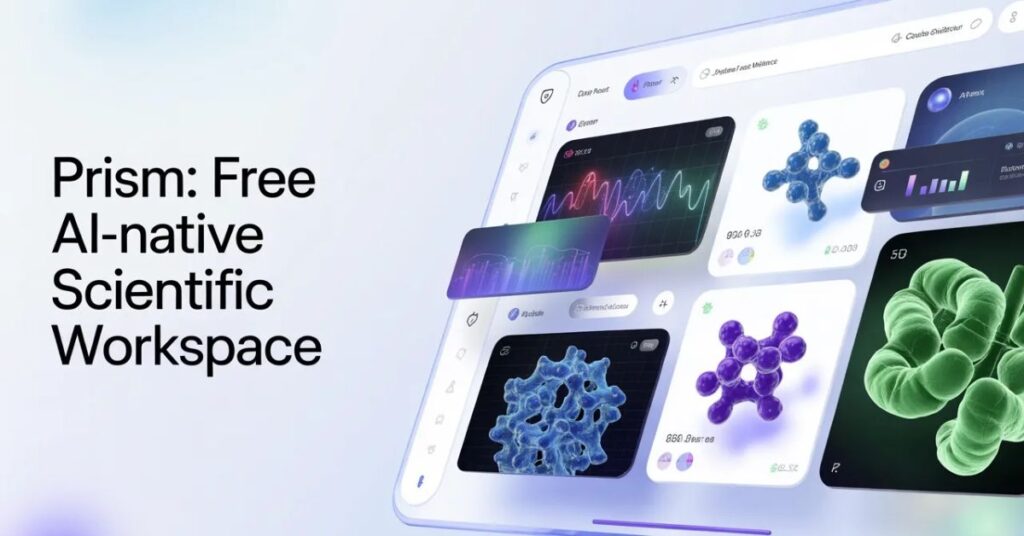
Announced January 27, 2026, and continuing to roll out through February, Prism is OpenAI’s answer to fragmented scientific writing workflows.
What it does: Prism is a free, cloud-based LaTeX workspace with GPT-5.2 integrated directly into the document. It combines drafting, revision, citation management, and collaboration in one place. The AI can draft text with full document context, manage equations and references, search literature, and even convert whiteboard scribbles into LaTeX equations.
How to access it: Free for anyone with a ChatGPT personal account at prism.openai.com. Organizational support for Business, Enterprise, and Education plans coming soon.
Who benefits most: Researchers, academics, students, and anyone writing scientific papers. With 1.3 million scientists submitting 8 million science and math queries weekly to ChatGPT, Prism addresses a clear need. It offers unlimited projects and collaborators with no subscription fees.
4. Visual Responses and In-Line Highlights
Rolled out globally on January 30, 2026, across web, iOS, and Android.
What it does: Responses now include at-a-glance visuals for everyday questions like sports scores, unit conversions, or calculations. Important people, places, products, and ideas appear as in-line highlights. Tapping a highlight opens a side panel with key facts and trusted sources—similar to Google’s knowledge panels.
How to access it: Automatically enabled for all users on the latest version of ChatGPT.
Who benefits most: Anyone seeking quick factual information without follow-up questions. This makes ChatGPT more efficient for research, fact-checking, and general knowledge queries.
5. OpenAI Frontier: Enterprise AI Agent Platform

Announced February 5, 2026, OpenAI Frontier represents a major push into enterprise AI deployment.
What it does: Frontier is a platform that helps organizations build, deploy, and govern AI agents at scale. It connects to existing data warehouses, CRM systems, ticketing tools, and internal applications, giving AI “coworkers” shared business context. The platform works with systems teams already have without requiring replatforming.
How to access it: Available for Enterprise customers through direct contact with OpenAI’s team.
Who benefits most: Large organizations deploying AI across departments. Early adopters report dramatic results: a major manufacturer reduced production optimization from six weeks to one day, and a global investment company freed up 90% more time for salespeople by automating sales processes.
6. Thinking Time Adjustments for GPT-5.2
Throughout early February, OpenAI fine-tuned thinking time settings for GPT-5.2 Thinking models.
What it does: OpenAI lowered Standard and Light thinking times based on user preference for faster responses. After inadvertently reducing Extended thinking settings in January, they restored Extended thinking to prior levels on February 4, 2026. Users can now choose between Light (faster), Standard (balanced), or Extended (deeper reasoning) settings.
How to access it: Available to Plus, Pro, Business, and Enterprise users through the model selector when using GPT-5.2 Thinking.
Who benefits most: Users who need flexibility between speed and depth—quick responses for routine tasks, extended thinking for complex problems requiring thorough analysis.
7. Branch Conversations Feature
What it does: Users can now create conversation branches by hovering over any message, clicking More actions (⋯), and selecting “Branch in new chat.” This creates a separate conversation thread from that point without losing the original discussion.
How to access it: Available today for all logged-in users on web.
Who benefits most: Anyone exploring multiple directions in a conversation great for brainstorming, comparing different approaches, or testing various solutions without cluttering the main thread.
How to Access the ChatGPT New Features
Step-by-Step Guide
- Update ChatGPT: Ensure you’re running the latest version of ChatGPT on web, iOS, or Android
- Check Your Plan: Some features require paid subscriptions:
- Free tier: Basic ChatGPT, limited GPT-5.2 Instant access, Health (waitlist), Prism, visual responses
- ChatGPT Go ($8/month): 10× more messages, GPT-5.2 Instant priority, longer memory
- ChatGPT Plus ($20/month): GPT-5.2 Thinking, Codex access, full Health features
- ChatGPT Pro ($200/month): GPT-5.2 Pro, unlimited thinking time, priority access
- Enable Health: Look for “Health” in the ChatGPT sidebar, or join the waitlist through Settings
- Access Prism: Visit prism.openai.com with your ChatGPT account
- Try Codex: Available through the Codex app download, CLI installation, or IDE extension
Free vs Paid Tier Differences
Free Tier Includes:
- Limited GPT-5.2 Instant access
- Visual responses and highlights
- ChatGPT Health (waitlist)
- Prism scientific workspace
- Projects (up to 5 file uploads)
- Branch conversations
Paid Tiers Add:
- GPT-5.3-Codex for development
- Extended thinking capabilities
- More projects with higher file limits (25-40 files)
- Priority access to new features
- No ads (Free and Go tiers will see ads starting mid-2026)
- Advanced Voice improvements
User Reactions and Early Reviews
The February 2026 updates have generated significant buzz across social media and tech communities.
On GPT-5.3-Codex: Developers at Windsurf stated, “GPT-5.2 represents the biggest leap for GPT models in agentic coding since GPT-5 and is a SOTA coding model in its price range. The version bump undersells the jump in intelligence.”
On Prism: One researcher commented on the pricing impact: “The AI integration is the least useful feature Prism offers. Just the fact that I can have unlimited projects and collaborators for free makes it a better choice than Overleaf.”
On ChatGPT Health: Privacy experts urge caution. Dr. Danielle Bitterman from Mass General Brigham Digital noted, “The most conservative approach is to assume that any information you upload into these tools will no longer be private,” though OpenAI maintains Health data won’t train models and remains isolated from other chats.
General Sentiment: ChatGPT maintains roughly 68% market share despite a 19-point drop in 2026 as competitors like Google Gemini surge. Users appreciate the rapid innovation but express concerns about pricing ($60/month to subscribe to ChatGPT Plus, Claude Pro, and Gemini Advanced separately) and the upcoming introduction of ads to free and Go tiers.
Comparison: ChatGPT vs Competitors (Gemini, Claude, Copilot)
| Feature | ChatGPT | Google Gemini | Claude | Microsoft Copilot |
| Latest Model | GPT-5.2, GPT-5.3-Codex | Gemini 3 Pro | Claude Sonnet 4.5 | GPT-4-based |
| Context Window | 32K-128K tokens | 1M tokens | 200K tokens | Varies |
| Coding Strength | Excellent (55.6% SWE-Bench Pro) | Very Good | Excellent (71.2% HumanEval) | Good |
| Web Search | Yes | Real-time | Limited (Pro only) | Yes (Bing) |
| Voice Mode | Advanced Voice | Yes | No | Yes |
| Image Generation | DALL-E 3 | Imagen 3 | No | DALL-E 3 |
| Best For | General use, coding, versatility | Research, Google ecosystem | Long documents, precision writing | Microsoft 365 integration |
| Unique Strengths | Codex development, Health, Prism | Massive 1M token context, speed | Ethical reasoning, minimal hallucinations | Native Office integration |
| Pricing | $0-$200/month | $0-$20/month | $0-$20/month | $0-$30/month |
| Market Share | 68% | 18.2% | Growing enterprise | Significant in business |
Which AI Is Best for What Task?
- Complex coding projects: ChatGPT (GPT-5.3-Codex) or Claude
- Quick solutions and broad knowledge: ChatGPT
- Processing huge documents/codebases: Gemini (1M token context)
- Scientific writing: ChatGPT (Prism)
- Health and wellness tracking: ChatGPT (Health)
- Microsoft Office work: Copilot
- Google Workspace integration: Gemini
- Precision and safety: Claude
- Fastest responses: Gemini
What to Expect Next from ChatGPT after ChatGPT New Features
Rumored Upcoming Features
- Expanded Health Integrations: OpenAI hinted at more wellness app connections and deeper health insights in coming weeks
- Prism Organization Support: Business, Enterprise, and Education plans will gain access to Prism collaborative workspaces
- Advertising Launch: Mid-January 2026 confirmed ads will appear for Free and Go users in the United States, with clear labeling and no influence on responses
- Model Retirements: February 13, 2026 will see GPT-5 (Instant and Thinking), GPT-4o, GPT-4.1, GPT-4.1 mini, and OpenAI o4-mini retired from ChatGPT (API unchanged)
- Age Prediction Expansion: EU rollout of teen safety features through age prediction models
- ChatGPT for Healthcare: Enterprise healthcare product with HIPAA compliance already rolling out to major institutions
OpenAI Roadmap Insights
Kevin Weil, OpenAI’s VP for Science, stated at a press conference: “I think 2026 will be for AI and science what 2025 was for AI and software development. We’re starting to see that same kind of inflection.”
This signals OpenAI’s strategic pivot beyond general chatbot capabilities toward specialized vertical applications in healthcare, scientific research, enterprise automation, and professional development tools.
The company’s partnership with NVIDIA for GB200 NVL72 systems powers the 25% speed improvements in GPT-5.3-Codex, suggesting continued infrastructure investments will drive performance gains throughout 2026.
Conclusion
ChatGPT’s new features February 2026 updates represent a fundamental shift from conversational AI to an integrated platform for work, health, and scientific discovery. The top three features transforming how people use ChatGPT are:
- GPT-5.3-Codex for professional-grade software development
- ChatGPT Health for personalized wellness tracking and medical navigation
- Prism for collaborative scientific writing and research
Whether you’re a developer leveraging agentic coding capabilities, a patient seeking to understand health data, or a researcher writing academic papers, ChatGPT now offers specialized tools that go far beyond traditional chatbot interactions.Ready to explore these features yourself? Update to the latest version of ChatGPT, check which features are available on your plan, and join waitlists for Health and upcoming features. The AI landscape is evolving rapidly staying current with these updates ensures you’re maximizing the potential of artificial intelligence in your daily work and life.
FAQs
What are the new features of ChatGPT 4o?
ChatGPT new features February 2026 have moved beyond GPT-4o to GPT-5.2 and GPT-5.3-Codex. GPT-4o is being retired on February 13, 2026. Current features include visual responses, in-line highlights, Advanced Voice mode, and improved reasoning capabilities that surpass the older GPT-4o model.
Is GPT-5 coming?
GPT-5 already launched in 2025. The ChatGPT new features February 2026 showcase GPT-5.2 (Instant and Thinking versions) and GPT-5.3-Codex for advanced coding. OpenAI continues refining the GPT-5 family rather than immediately jumping to GPT-6.
Is ChatGPT Go the same as ChatGPT 5?
No. ChatGPT Go is a $8/month subscription tier, not a model version. The ChatGPT new features February 2026 are available across different plans: Go users get GPT-5.2 Instant with 10× more messages, while GPT-5.2 Thinking requires ChatGPT Plus ($20/month) or higher.
What are the features of ChatGPT 6?
ChatGPT 6 doesn’t exist yet. Current ChatGPT new features February 2026 include GPT-5.3-Codex for coding, ChatGPT Health for medical records, Prism workspace for scientists, visual responses, and OpenAI Frontier for enterprises—all running on GPT-5 family models.
How long until GPT 6?
OpenAI hasn’t announced GPT-6 or a timeline. Based on previous release patterns (GPT-4 in March 2023, GPT-5 in 2025), GPT-6 could arrive in 2027-2028. The ChatGPT new features February 2026 focus on expanding GPT-5’s specialized capabilities rather than rushing to the next major version.
What is the difference between ChatGPT free and paid 2025?
As of ChatGPT new features February 2026, Free tier gets limited GPT-5.2 Instant access, visual responses, and basic features (ads coming mid-2026). Paid tiers offer: Go ($8/month) – 10× more messages; Plus ($20/month) – GPT-5.2 Thinking, Codex, Health; Pro ($200/month) – unlimited thinking time and GPT-5.2 Pro model with extended reasoning.

Marvi Channa is the author at DailyNewsHub.site, sharing breaking news, tech updates, sports highlights, and trending global stories with clarity and credibility. She’s passionate about timely reporting and keeping readers informed fast