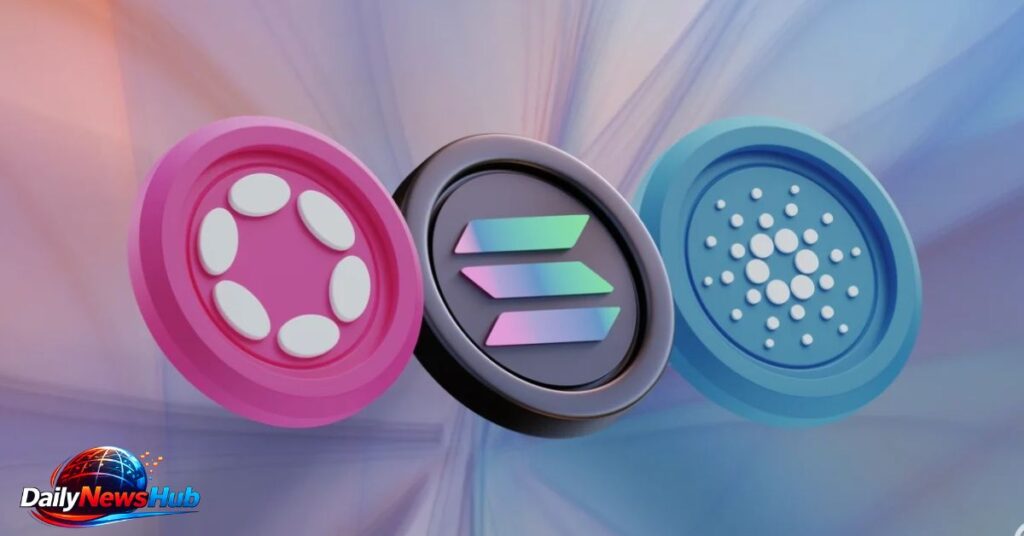
The Solana vs Cardano vs Polkadot 2026 debate is the most consequential altcoin conversation happening in crypto right now. Three platforms. Three radically different philosophies. Three communities are absolutely convinced their chain is the one that will define the next era of decentralized computing. And three price charts that have made early believers wealthy and latecomers frustrated.
If you are trying to figure out which blockchain deserves your attention, your capital, or your development efforts in 2026, this Solana vs Cardano vs Polkadot 2026 comparison cuts through the noise and delivers the analysis you actually need. We are going beyond price speculation to examine what each network is building, where each one falls short, and which one is best positioned to win the smart contract platform wars over the next 12 months and beyond.
By the time you finish reading this Solana vs Cardano vs Polkadot 2026 breakdown, you will have a clear framework for making your own informed decision whether you are an investor, a developer, or simply a curious observer trying to understand where the blockchain industry is headed.
Why the Smart Contract Platform Battle Matters in 2026
To properly evaluate Solana vs Cardano vs Polkadot 2026, it helps to understand what is at stake. Smart contract platforms are not just blockchain networks they are programmable financial and social infrastructure. The platform that captures the dominant share of developer activity, user adoption, and capital deployment will become the operating system of the decentralized economy.
The total value locked across all smart contract platforms currently runs into the hundreds of billions of dollars. Decentralized finance protocols, NFT ecosystems, tokenized real-world assets, gaming applications, and identity systems are all competing for the best blockchain infrastructure to build on. Every dollar of developer talent, venture capital, and institutional adoption that flows to one platform is a dollar that does not flow to the others.
This is a winner-take-most market not necessarily winner-take-all, but one where network effects, liquidity, and ecosystem depth create compounding advantages for the leaders and compounding disadvantages for the laggards. Choosing the right best smart contract platform 2026 is therefore not merely an academic exercise; it has profound implications for investment returns and the direction of the entire blockchain industry.
Solana in 2026: Speed, Scale, and Ecosystem Dominance
When evaluating Solana vs Cardano vs Polkadot 2026, Solana is the platform that commands the most attention from both investors and developers in the current cycle. Its combination of raw performance, growing ecosystem, and cultural momentum has made it the most discussed alternative to Ethereum in 2026.
Solana Performance and Technology
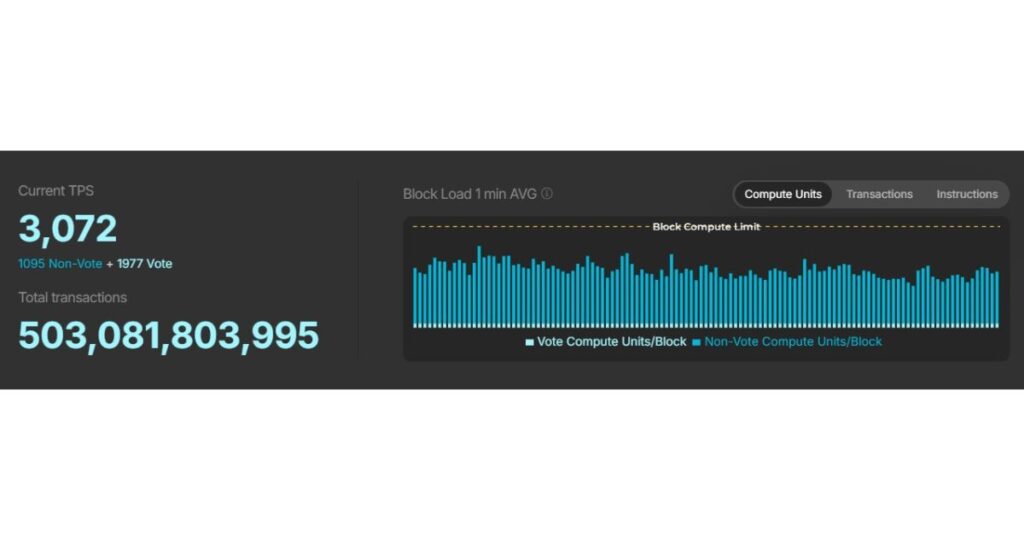
Solana’s core technical proposition remains what it has always been: extraordinary speed at low cost. The network processes transactions at theoretical throughput levels of up to 65,000 transactions per second, with real-world sustained throughput running significantly higher than any competing layer-1 blockchain. Transaction fees on Solana typically cost fractions of a cent, making it the practical choice for applications that require high-frequency interaction or have price-sensitive user bases.
The technical architecture behind this performance, a combination of Proof of History, Tower BFT consensus, and Gulf Stream transaction forwarding, is genuinely innovative and has proven its ability to handle real-world demand at scale. Solana’s validator network has become more geographically distributed over time, addressing earlier criticisms about centralization that were legitimate concerns in the network’s early days.
Solana Network Outage History: Has the Problem Been Solved?
No honest Solana vs Cardano vs Polkadot 2026 analysis can ignore Solana network outage history. Between 2021 and 2023, Solana experienced multiple high-profile network outages that raised serious questions about its reliability as infrastructure for mission-critical financial applications. These outages caused by a combination of spam attacks, validator software bugs, and the architectural trade-offs inherent in optimizing for speed were a genuine reputational liability.
The good news for Solana bulls is that the engineering team has made demonstrable progress. Network stability has improved significantly since the introduction of QUIC networking, stake-weighted quality of service, and fee market improvements. The frequency and severity of outages has declined materially. Whether the Solana network outage history represents a solved problem or a recurring architectural vulnerability remains a legitimate debate but the trend is moving in the right direction.
For developers building financial applications where downtime is unacceptable, the outage history remains a consideration. For consumer-facing applications where occasional disruption is tolerable, the risk-reward of building on Solana’s superior performance infrastructure is increasingly compelling.
Solana Ecosystem Growth 2026
Solana ecosystem growth 2026 is the most compelling part of the Solana story. The network has emerged as the dominant platform for several categories of blockchain applications that have captured mainstream attention and real user adoption.
Decentralized exchanges on Solana, particularly Jupiter and Raydium process daily volumes that rival centralized exchanges on many trading days. The Solana NFT ecosystem, while more consolidated than Ethereum’s, has some of the highest-quality collections and most active secondary markets in the entire blockchain space. Mobile-first crypto applications have gravitated toward Solana’s low-fee environment, and the Solana Mobile Stack initiative has created the foundation for a genuinely native crypto-mobile experience.
Perhaps most importantly, Solana ecosystem growth 2026 has been driven by real users doing real things, not just speculative capital seeking yield. Daily active addresses, transaction counts, and DeFi protocol revenues all point to genuine product-market fit in multiple verticals. This organic adoption is the most sustainable foundation for long-term ecosystem value.
Solana Price Prediction 2026
The Solana price prediction 2026 is one of the most debated topics in the altcoin market. SOL entered 2026 with significant momentum, trading at levels that reflect its status as the clear number-two smart contract platform by most measures of ecosystem activity.
Bear case: $90–$120. A broader market downturn, a return of network stability issues, or aggressive competition from Ethereum layer-2 networks could push SOL back toward this range, which represents significant historical support.
Base case: $220–$280. Continuation of current ecosystem growth trends, positive macro conditions, and sustained developer activity support a year-end target in this range for the Solana price prediction 2026 base scenario.
Bull case: $350–$500. A broader altcoin bull market, institutional ETF approval for SOL, and a breakthrough consumer application launching on Solana could drive the price toward these levels. This is the scenario where the which altcoin will be 10x in 2026 conversation frequently mentions Solana as a candidate though a 10x from current levels would require extraordinary circumstances.
Cardano in 2026: The Academic Approach Meets Real-World Demand
In the Solana vs Cardano vs Polkadot 2026 comparison, Cardano occupies a unique and often misunderstood position. It is the blockchain that the crypto community has simultaneously loved and criticized more than any other — praised for its rigorous academic foundations and criticized for its historically slow delivery of promised features.
Cardano ADA Update 2026: Has the Thesis Finally Arrived?
The Cardano ADA update 2026 narrative centers on one fundamental question: has Cardano finally delivered the smart contract ecosystem and DeFi activity that its community has been waiting years for?
The honest answer is: more than before, but not yet at the scale its valuation has sometimes implied. Cardano’s smart contract platform, powered by the Plutus programming language and Haskell-based development environment, has a growing but still relatively small DeFi ecosystem compared to Solana or Ethereum. Total value locked on Cardano has grown in 2026, and the number of projects building on the network has increased meaningfully compared to two years ago.
The Cardano ADA update 2026 that has generated the most excitement is the continued rollout of the Hydra scaling solution and Mithril protocol improvements, which are designed to dramatically increase Cardano’s transaction throughput without compromising its formal verification security model. These upgrades represent genuine technical progress on the hardest problems in blockchain scaling, and the academic rigor with which they have been developed gives them credibility that more haphazardly engineered solutions lack.
Governance has also become a Cardano strength in 2026. The Voltaire era upgrades have given ADA holders meaningful on-chain governance rights, creating a decentralized decision-making framework that is more sophisticated than anything currently deployed at scale on competing networks. For investors and developers who care about long-term protocol governance, this is a meaningful differentiator.
Cardano vs Ethereum 2026: A Different Kind of Competition
The Cardano vs Ethereum 2026 comparison is instructive precisely because these two networks are competing for overlapping but not identical user bases. Ethereum has won the institutional finance and high-value DeFi market by default its network effects, liquidity depth, and developer ecosystem are simply too large to displace in the near term.
Where Cardano vs Ethereum 2026 becomes interesting is in the segments where Ethereum’s high fees and complexity create openings. Cardano has made deliberate investments in identity and credentialing systems for emerging markets particularly in Africa where blockchain-based identity infrastructure could have profound social impact. The Atala PRISM identity platform and various government partnerships in developing economies represent a go-to-market strategy that Ethereum is not pursuing with the same focus.
If these emerging market initiatives gain traction, Cardano could carve out a meaningful niche as the blockchain infrastructure layer for identity, supply chain, and financial inclusion applications in regions where traditional financial infrastructure is underdeveloped. This is a long-term thesis that does not show up in 2026 TVL numbers but could be transformative over a decade.
Cardano ADA Price Outlook 2026
ADA’s price in 2026 reflects the tension between Cardano’s genuine technical progress and its still-nascent ecosystem adoption. The token trades at levels that price in some but not all of the potential upside from the platform’s roadmap.
Bear case: $0.35–$0.50, if broader market conditions deteriorate and Cardano fails to demonstrate meaningful ecosystem growth that can attract developer talent away from Solana and Ethereum.
Base case: $0.85–$1.20, reflecting continued incremental progress on the technical roadmap, modest DeFi growth, and improving governance adoption.
Bull case: $1.80–$2.50, requiring a breakout moment, a major institutional partnership, a successful Hydra deployment at scale, or a viral consumer application that changes the narrative around Cardano’s ecosystem velocity.
Polkadot in 2026: The Interoperability Vision Comes Into Focus
In the Solana vs Cardano vs Polkadot 2026 analysis, Polkadot is the most architecturally distinct of the three. While Solana and Cardano are competing directly to be the best single-chain smart contract platform, Polkadot’s vision is fundamentally different: it is building infrastructure for a multi-chain world rather than trying to be the one chain to rule them all.
Polkadot DOT News 2026: What Has Changed?
Polkadot DOT news 2026 has been dominated by two major developments: the transition to the Agile Coretime model and the ongoing maturation of the parachain ecosystem that is the centerpiece of Polkadot’s technical architecture.
The Agile Coretime upgrade represents a fundamental restructuring of how blockspace is allocated and priced on Polkadot. Rather than the previous parachain slot auction model which required substantial DOT lockups and created barriers to entry for smaller teams, Agile Coretime allows projects to purchase blockspace flexibly, more like a cloud computing service than a long-term real estate lease. This change has meaningfully lowered the cost and complexity of building on Polkadot, and the early evidence suggests it is attracting a new wave of development activity.
The parachain ecosystem specialized blockchains that run in parallel and interoperate through Polkadot’s relay chain has continued to mature. Parachains focused on DeFi, identity, gaming, and real-world assets are all active, and the cross-chain communication infrastructure (XCM) that allows them to interact with each other has become progressively more capable and battle-tested.
Polkadot’s Interoperability Advantage
Where Polkadot genuinely differentiates itself from both Solana and Cardano is in its native cross-chain communication capabilities. The vision of a blockchain ecosystem where specialized chains optimized for specific use cases can freely communicate and transfer value is technically compelling and arguably more realistic as a long-term architecture than the single-chain maximalism that Solana pursues.
As the blockchain space matures and different chains develop genuine specializations, the infrastructure that enables them to interoperate becomes more valuable. Polkadot’s early investment in this infrastructure now being enhanced through the JAM upgrade that promises to make the relay chain more general-purpose and efficient positions it as essential plumbing for a multi-chain future.
The challenge is that this vision requires the multi-chain future to actually materialize. If one or two chains win the majority of activity, the interoperability story matters less. The Solana vs Cardano vs Polkadot 2026 competitive landscape will ultimately test which architectural bet single-chain performance or multi-chain interoperability better reflects how the blockchain ecosystem actually evolves.
Polkadot DOT Price Outlook 2026
DOT’s price in 2026 has been challenged by the transition period associated with moving to the Agile Coretime model and the perception among some investors that Polkadot’s complexity makes it harder to evaluate than single-chain competitors.
Bear case: $4.50–$6.00, if the Agile Coretime transition fails to meaningfully accelerate ecosystem growth and broader market conditions are unfavorable.
Base case: $9.00–$13.00, reflecting successful Agile Coretime adoption, growing parachain activity, and improving sentiment around the interoperability thesis.
Bull case: $18.00–$25.00, requiring the JAM upgrade to deliver as promised and a catalyst that demonstrates Polkadot’s cross-chain infrastructure as genuinely essential to the broader blockchain ecosystem.
Solana vs Cardano vs Polkadot 2026: Head-to-Head Comparison
Now that we have examined each platform individually, here is how Solana vs Cardano vs Polkadot 2026 stacks up across the dimensions that matter most for investors and developers.
Transaction Speed and Cost
Solana wins this category decisively. Its throughput and fee structure are unmatched among layer-1 networks at meaningful scale. Cardano’s transaction costs are low but throughput remains limited without Hydra. Polkadot’s performance depends heavily on which parachain is being used, making generalization difficult.
Winner: Solana
Developer Ecosystem and Tooling
Solana has the most rapidly growing developer ecosystem among the three, with Rust-based development, excellent tooling, and strong venture capital support for projects building on the network. Cardano’s Haskell/Plutus environment attracts a specific type of formally-minded developer but has a steeper learning curve. Polkadot’s Substrate framework is powerful but complex.
Winner: Solana (with Cardano’s formal verification model as a meaningful differentiator for security-critical applications)
Decentralization and Security
Cardano arguably leads on decentralization metrics, with a large and geographically distributed pool of stake pool operators and a formal verification development approach that prioritizes correctness above all else. Polkadot’s shared security model, where parachains inherit the security of the relay chain, is an elegant solution to a real problem. Solana’s validator requirements which include substantial hardware investment create some degree of centralization pressure.
Winner: Cardano (for decentralization and formal security); Polkadot (for shared security architecture)
Ecosystem and DeFi Activity
Solana’s DeFi ecosystem is the most active of the three by virtually every metric TVL, daily transaction volume, unique active users, and protocol revenue. Cardano’s DeFi ecosystem is growing but remains small in absolute terms. Polkadot’s DeFi activity is spread across parachains, making it harder to measure but also arguably more specialized and less cannibalistic than a single-chain ecosystem.
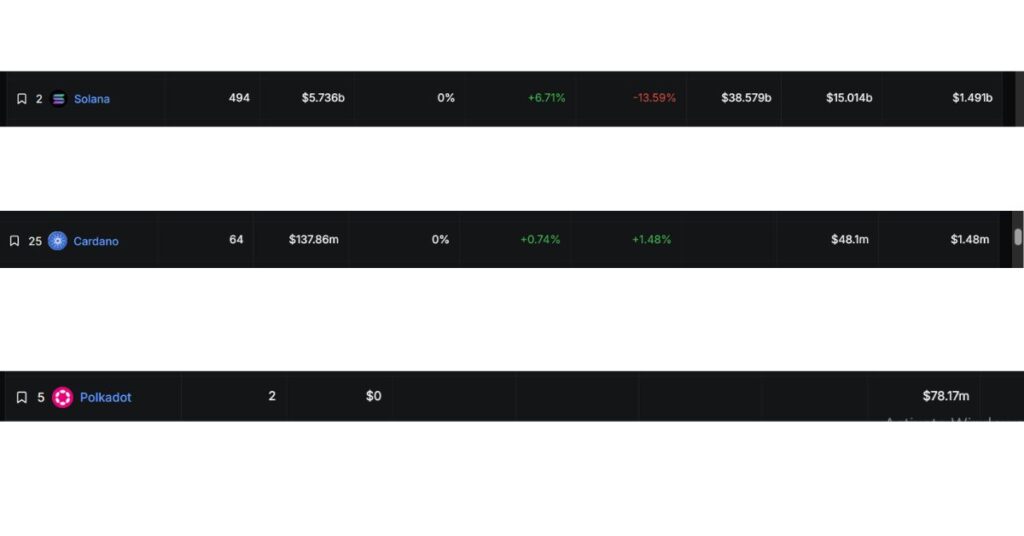
Winner: Solana
Long-Term Vision and Architecture
This is where the comparison becomes most subjective. Solana’s vision is to be the single highest-performance blockchain that can handle everything. Cardano’s vision is to be the most formally correct and academically rigorous blockchain, particularly for high-stakes and institutional applications. Polkadot’s vision is to be the infrastructure layer connecting a universe of specialized blockchains.
Winner: Depends on which vision of the blockchain future you find most compelling
Network Reliability
Given the Solana network outage history, Cardano and Polkadot both have stronger track records on uptime. Neither has experienced the kind of extended network halts that damaged Solana’s reputation in earlier years. Solana’s improvements have narrowed this gap, but it has not been eliminated.
Winner: Cardano and Polkadot (tied)
Which Altcoin Will 10x in 2026? Honest Assessment
Which altcoin will be 10x in 2026 is the one every crypto investor wants answered and the honest answer is that no one knows with certainty. What we can do is assess the probability distribution of outcomes for each asset.
Solana has the lowest probability of a 10x from current levels because it has already experienced significant price appreciation and its market capitalization is large enough that a 10x would require an extraordinary amount of new capital inflow. However, in a full-scale altcoin bull market with a major catalyst like ETF approval, it is not impossible.
Cardano has a higher mathematical probability of 10x from current levels because its market capitalization is lower and its price has not run as aggressively as Solana’s in recent cycles. The 10x scenario requires a genuine ecosystem breakthrough a viral application, a major institutional partnership, or a technical upgrade that changes the developer and user experience in a way that drives rapid adoption.
Polkadot has the most asymmetric risk-reward profile of the three for a potential 10x scenario. DOT’s price has significantly underperformed in the current cycle, its market capitalization is relatively modest, and the Agile Coretime transition is a genuine fundamental improvement that has not yet been fully priced in. If the interoperability thesis plays out and Polkadot’s ecosystem accelerates meaningfully, the gap between its current price and its fundamental potential is wider than for either Solana or Cardano.
Best Smart Contract Platform 2026: The Verdict
After this comprehensive Solana vs Cardano vs Polkadot 2026 analysis, what is the verdict on the best smart contract platform 2026?
The honest answer is that there is no single winner that dominates across every dimension which is itself a meaningful insight. The blockchain space in 2026 is not converging on one chain; it is diversifying into a multi-chain ecosystem where different platforms serve different needs.
Choose Solana if you prioritize performance, ecosystem vitality, developer momentum, and consumer-facing application potential. Solana is the platform most likely to host the next breakout consumer crypto application, and its ecosystem already has the depth to support serious DeFi and NFT activity.
Choose Cardano if you prioritize formal security, long-term governance decentralization, and exposure to the emerging market identity and financial inclusion thesis. Cardano is the platform most likely to matter in contexts where correctness and auditability are non-negotiable requirements.
Choose Polkadot if you believe in the multi-chain future and want exposure to cross-chain infrastructure that becomes more valuable as blockchain adoption diversifies. Polkadot is the platform most likely to benefit from a world where different specialized chains need to communicate seamlessly.
The best smart contract platform 2026 is ultimately the one that best fits your use case, your investment thesis, and your time horizon. The Solana vs Cardano vs Polkadot 2026 competition is not zero-sum all three can succeed, and the wisest investors are likely to maintain exposure to more than one.
Solana vs Cardano vs Polkadot 2026: Key Catalysts to Watch
For investors monitoring the Solana vs Cardano vs Polkadot 2026 space, these are the specific catalysts that could most meaningfully move price and narrative for each platform in the months ahead.
Solana catalysts: Spot SOL ETF approval, a major consumer application reaching millions of users, continued improvement in network stability metrics, and sustained growth in Solana DeFi protocol revenues.
Cardano catalysts: Hydra scaling deployment at meaningful scale, a major government or institutional partnership announcement, accelerating TVL growth in the Cardano DeFi ecosystem, and evidence that the Voltaire governance system is driving effective protocol development decisions.
Polkadot catalysts: Successful JAM upgrade implementation, a major dApp or DeFi protocol choosing Polkadot as its primary chain, accelerating Agile Coretime adoption, and cross-chain use cases that demonstrate Polkadot’s interoperability advantage in a way that captures mainstream crypto attention.
Final Thoughts: Solana vs Cardano vs Polkadot 2026
The Solana vs Cardano vs Polkadot 2026 comparison ultimately reveals three genuinely different answers to the same fundamental question: how should a blockchain balance performance, security, decentralization, and scalability?
Solana says optimizing for speed and cost make the network so fast and cheap that no application is out of reach. Cardano says optimize for correctness and governance, build a system so rigorous that institutions and governments can trust it with mission-critical applications. Polkadot says optimize for interoperability to build infrastructure that connects all chains rather than competing to be the only one.
All three perspectives are intellectually coherent. All three have passionate developer communities building real applications. And all three have price charts that reflect genuine investor belief in their respective visions.
The Solana vs Cardano vs Polkadot 2026 race is not over; it may not be decided within 2026, or even within this decade. What is clear is that the competition between these platforms is making each one better, driving innovation across the entire smart contract ecosystem, and ultimately creating more value for users, developers, and investors than any single monopolistic chain could.
That is the most important thing the Solana vs Cardano vs Polkadot 2026 debate tells us — not which one wins, but that the competition itself is the engine of progress that makes blockchain technology worth paying attention to.
Frequently Asked Questions
Which is better in 2026 : Solana, Cardano, or Polkadot?
In the Solana vs Cardano vs Polkadot 2026 comparison, Solana leads on ecosystem activity and performance, Cardano leads on formal security and governance, and Polkadot leads on cross-chain interoperability. The best choice depends on your specific use case and investment thesis.
What is the Solana price prediction for 2026?
The Solana price prediction 2026 ranges from a bear case of $90–$120 to a base case of $220–$280 and a bull case of $350–$500, depending on market conditions and ecosystem growth.
What is the Cardano ADA update in 2026?
The Cardano ADA update 2026 includes continued Hydra scaling deployment, Mithril protocol improvements, and Voltaire era governance upgrades that give ADA holders meaningful on-chain decision-making rights.
Has Solana fixed its network outage problem?
Solana network outage history shows significant improvement since 2023, with meaningfully fewer and less severe disruptions following engineering fixes to networking protocols and free market design but the issue cannot be declared fully resolved.
Which altcoin could be 10x in 2026?
Among Solana, Cardano, and Polkadot, DOT has the most asymmetric risk-reward profile for a potential 10x due to its relatively low market cap and the Agile Coretime transition representing an underpriced fundamental catalyst.
Disclaimer: This article is for informational and educational purposes only and does not constitute financial or investment advice. Cryptocurrency investments are highly volatile and speculative. Always conduct your own due diligence and consult a qualified financial advisor before making investment decisions.
Marvi Channa is the author at DailyNewsHub.site, sharing breaking news, tech updates, sports highlights, and trending global stories with clarity and credibility. She’s passionate about timely reporting and keeping readers informed fast