
The digital landscape is evolving rapidly, and understanding the Google AI update explained is crucial for anyone who wants to maintain or improve their website’s visibility. Google’s artificial intelligence updates have completely transformed how search results are delivered, making it essential for content creators, marketers, and website owners to adapt their strategies accordingly.
These groundbreaking algorithm changes leverage machine learning and natural language processing to deliver more accurate, relevant search results. As search engines become increasingly smarter, businesses must stay informed about these updates to remain competitive in organic search rankings.
This comprehensive guide will help you navigate the complexities of Google’s AI-powered search ecosystem and implement effective optimization strategies.
What Is the Google AI Update?
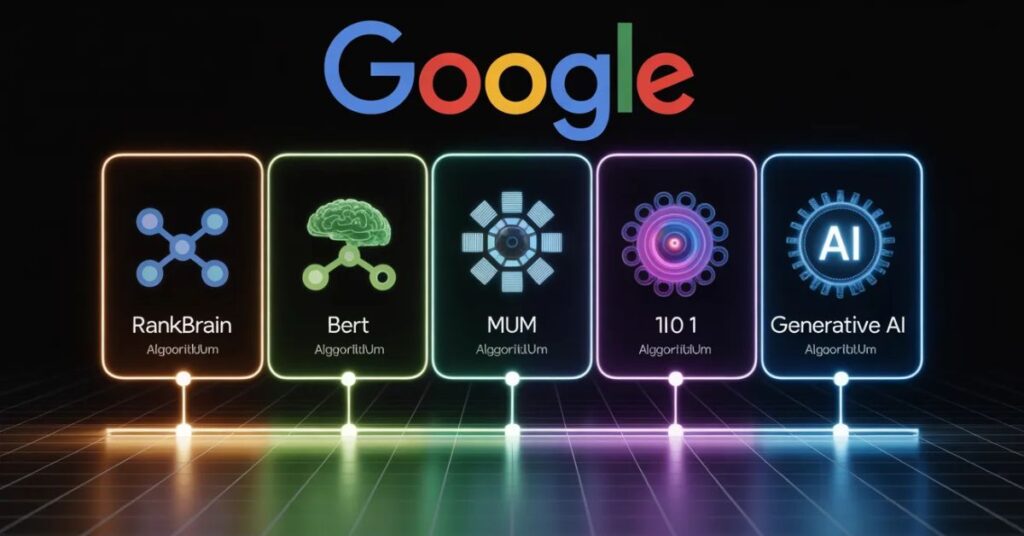
When we talk about the Google AI update explained in simple terms, we’re referring to Google’s implementation of advanced artificial intelligence and machine learning algorithms into its search engine. These updates fundamentally change how Google understands search queries, interprets content quality, and ranks web pages in search results.
Google has been integrating AI into its search algorithm for years, but recent updates have taken this integration to unprecedented levels. The search giant now uses sophisticated neural networks and natural language processing to better understand user intent and deliver more relevant results.
The Evolution of Google’s AI-Powered Search
To get the Google AI update explained properly, we need to look at its evolution. Google’s journey with artificial intelligence in search began with RankBrain in 2015, progressed through BERT in 2019, and has now advanced to more sophisticated systems including the Multitask Unified Model (MUM) and the Search Generative Experience (SGE).
Key AI Updates That Changed Search Forever
RankBrain was Google’s first major machine learning algorithm that helped process search queries. It learned to understand the relationship between words and concepts, making search results more contextually relevant.
BERT (Bidirectional Encoder Representations from Transformers) revolutionized how Google understands natural language in search queries. This neural network-based technique helps the search engine better comprehend the nuances and context of words in searches.
MUM (Multitask Unified Model) is 1,000 times more powerful than BERT and can understand information across text and images while working in 75 different languages simultaneously.
How Does the Google AI Update Impact Your Website Rankings?

Getting the Google AI update explained from an SEO perspective means understanding its impact on rankings. The AI-powered algorithms now prioritize:
Content Quality and Relevance
Google’s AI systems have become incredibly sophisticated at detecting high-quality content. The algorithms analyze semantic relationships, topic depth, content freshness, and user engagement signals to determine which pages deserve top rankings.
The search engine now understands synonyms, related concepts, and contextual meaning better than ever before. This means keyword stuffing is not only ineffective but can actually harm your rankings.
User Experience Signals
Machine learning algorithms track how users interact with search results. Metrics like click-through rates, time on page, bounce rates, and return to SERP rates all feed into Google’s understanding of content quality and relevance.
E-E-A-T (Experience, Expertise, Authoritativeness, Trustworthiness)
With the Google AI update explained in detail, you’ll understand that demonstrating expertise and authority in your niche has become paramount. Google’s AI can now assess whether content creators have genuine experience and knowledge in their subject matter.
Understanding Search Intent with AI Technology
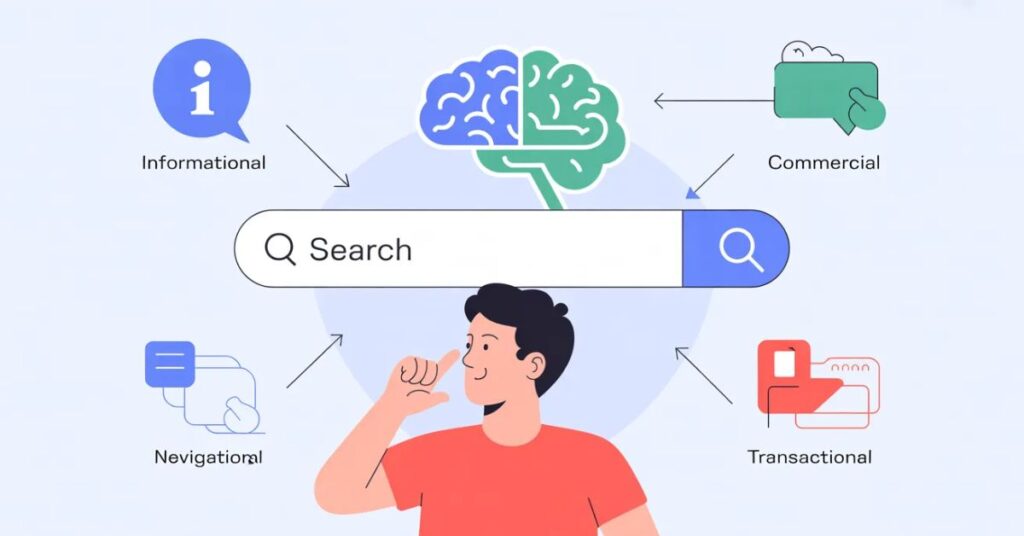
One crucial aspect of the Google AI update explained is how Google now interprets search intent. The AI algorithms categorize queries into four main types:
Informational intent – Users seeking knowledge or answers to questions Navigational intent – Users looking for a specific website or page Commercial investigation intent – Users researching products before purchase Transactional intent – Users ready to make a purchase or take action
Google’s artificial intelligence examines multiple factors including search history, location data, device type, and previous interactions to determine what users truly want when they type a query.
The Role of Natural Language Processing in Modern Search
Natural language processing (NLP) is central to having the Google AI update explained comprehensively. NLP enables Google to understand conversational queries, voice searches, and complex questions just as a human would.
This technology processes:
- Semantic search patterns
- Contextual word meanings
- Query reformulation
- Entity recognition
- Sentiment analysis
- Topic modeling
How to Optimize Content for Google’s AI Algorithms
Now that we have the Google AI update explained, let’s discuss optimization strategies:
Create Comprehensive, In-Depth Content
Gone are the days of thin content. Google’s AI rewards comprehensive articles that thoroughly cover topics from multiple angles. Aim for content that answers related questions and provides genuine value.
Focus on Topical Authority
Build clusters of content around core topics to establish topical authority. When Google’s machine learning algorithms see consistent, high-quality content on related subjects, they recognize your site as an authoritative source.
Optimize for Featured Snippets and Voice Search
With AI-powered search results, featured snippets and voice search answers have become crucial. Structure your content with clear headings, use question-based formats, and provide concise answers to common queries.
Improve Technical SEO
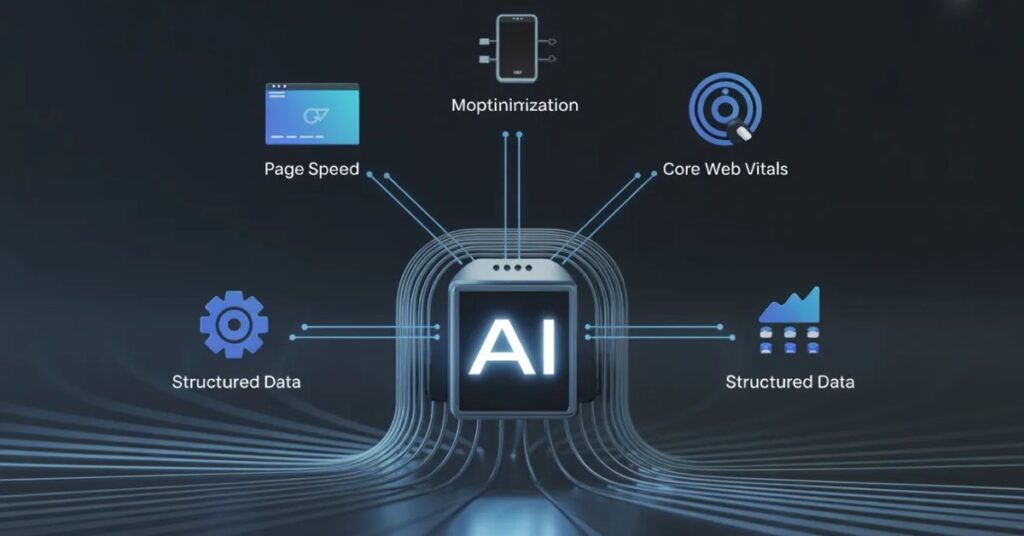
Google’s AI considers page speed, mobile responsiveness, Core Web Vitals, structured data markup, and secure connections (HTTPS) when ranking pages. These technical factors significantly impact how the algorithms assess your site.
Build High-Quality Backlinks
Link building remains important, but the Google AI update explained shows us that quality trumps quantity. The algorithms can now better identify natural link patterns versus manipulative link schemes.
The Impact of AI on Local Search Results
Local businesses need to understand the Google AI update explained in the context of local SEO. Google’s AI now processes:
- Local intent signals in queries
- Business information consistency across platforms
- Customer reviews and sentiment
- Geographic relevance
- Real-time location data
Preparing for Future AI Updates
With the Google AI update explained, it’s clear that continuous adaptation is necessary. Here’s how to future-proof your SEO strategy:
Stay Informed About Algorithm Changes
Follow official Google announcements through the Google Search Central Blog, attend SEO conferences, and monitor industry publications to stay ahead of upcoming changes.
Prioritize User Experience
Design websites with users in mind first, not search engines. Google’s AI increasingly rewards sites that provide exceptional user experiences.
Invest in Quality Content Creation
Develop content strategies that focus on solving user problems, answering questions comprehensively, and providing unique insights based on real expertise.
Embrace Multi-Format Content
Google’s AI now processes and ranks various content types including text, images, videos, podcasts, and infographics. Diversifying your content formats can improve visibility.
Common Mistakes to Avoid with AI-Powered Search
Understanding the Google AI update explained also means knowing what not to do:
- Using AI-generated content without human review and expertise
- Neglecting mobile optimization
- Ignoring Core Web Vitals metrics
- Creating content solely for search engines rather than users
- Building low-quality or spammy backlinks
- Keyword stuffing or over-optimization
Measuring Success in the AI Search Era
Track these key performance indicators to measure your success:
- Organic traffic growth
- Keyword ranking improvements
- Click-through rates from search results
- Average session duration
- Conversion rates from organic search
- Featured snippet appearances
FAQs
Can I turn off AI in my Google searches?
Yes, you can disable AI Overviews by adding “&udm=14” to the end of your Google search URL or using the “Web” filter option. This removes AI-generated summaries while keeping traditional search results.
What is the new AI thing on Google?
The new AI feature is called AI Overviews, which provides AI-generated summaries at the top of search results. It uses advanced language models to synthesize information from multiple sources and present concise answers to user queries.
Can I turn off Google AI &UDM 14?
The “&udm=14” parameter is what you use to turn off AI Overviews, not something you disable itself. Simply remove this parameter from the URL to see AI-generated content again.
What’s new in Google AI mode?
Google AI mode now features multi-step reasoning, image processing with text, Google Lens integration, conversational follow-ups, and shopping recommendations. The system handles more nuanced questions with improved accuracy and broader topic coverage.
Is AI reading my Gmail?
Google uses AI for spam filtering, smart compose, and email categorization, but this is automated—no humans read your emails. Your data remains private and secure, and you can control AI features in Gmail settings.
What can I do with Google AI mode?
You can ask complex questions, get step-by-step explanations, compare products, explore topics with follow-up suggestions, combine text and image queries, and access shopping recommendations. AI mode understands natural, conversational queries better than traditional keyword searches.
The Future of Search: What’s Next?

As we look ahead with the Google AI update explained, several trends are emerging:
Generative AI in search will provide AI-generated answers directly in search results Visual search capabilities will continue expanding with improved image recognition Multimodal search will combine text, voice, and visual queries seamlessly Personalization will become even more sophisticated based on user behavior and preferences
Conclusion: Adapting to AI-Powered Search Success
Having the Google AI update explained thoroughly empowers you to make informed decisions about your SEO strategy. The key takeaways are clear: focus on creating exceptional, user-first content that demonstrates genuine expertise, optimize technical aspects of your website, and stay adaptable as AI technology continues to evolve.
Google’s artificial intelligence updates aren’t something to fear—they’re opportunities to improve your content quality and better serve your audience. By understanding how machine learning algorithms evaluate content, implementing semantic SEO best practices, and prioritizing user experience, you can not only survive but thrive in the AI-powered search landscape.
The digital marketing landscape will continue evolving with artificial intelligence at its core. Those who embrace these changes, continuously learn, and adapt their strategies will be the ones who succeed in achieving and maintaining top search engine rankings.
Remember, with the Google AI update explained and properly understood, you’re equipped to navigate the future of search with confidence. Focus on quality, user intent, and genuine value creation, and you’ll align perfectly with what Google’s AI algorithms are designed to reward.

Marvi Channa is the author at DailyNewsHub.site, sharing breaking news, tech updates, sports highlights, and trending global stories with clarity and credibility. She’s passionate about timely reporting and keeping readers informed fast