
The U.S. Food and Drug Administration has continued its active pace of drug authorizations this month, greenlighting a range of new treatments that address conditions affecting millions of Americans. From a rare childhood bone disorder to one of the most treatment-resistant cancers, the FDA approvals February 2026 span a wide therapeutic landscape.
Patients and healthcare providers are taking note these newly authorized medicines offer fresh hope where existing options have historically been limited or insufficient. Whether you are managing a chronic skin condition, facing a cancer diagnosis, or caring for a child with a rare genetic disorder, this month’s approvals may directly impact your treatment options and quality of life.
1. Adquey (Difamilast) — Atopic Dermatitis

Approved February 12, 2026, Adquey (difamilast 1% ointment) is a topical phosphodiesterase 4 (PDE-4) inhibitor indicated for mild-to-moderate atopic dermatitis in patients aged two years and older. It works by blocking an enzyme that triggers skin inflammation, offering a non-steroidal alternative for patients who want to avoid long-term corticosteroid use.
Atopic dermatitis commonly known as eczema affects roughly 31 million Americans. Clinical trials demonstrated significant reductions in itch and skin lesion severity compared to placebo. Applied twice daily, Adquey limits systemic exposure compared to oral medications, making it a particularly attractive option for young children. Insurance coverage is anticipated to align with other branded topical therapies, though patients should confirm prior authorization requirements with their plan.
2. Rybrevant Faspro (Amivantamab + Hyaluronidase) — Non-Small Cell Lung Cancer

Authorized February 17, 2026, Rybrevant Faspro is a once-monthly subcutaneous formulation of the EGFR/MET bispecific antibody amivantamab. The key upgrade over the original intravenous version: patients can now receive this therapy with a single monthly injection rather than frequent IV infusion visits, a meaningful quality-of-life improvement.
EGFR mutations are present in 10–15% of non-small cell lung cancer patients in the U.S. (higher in Asian populations). By targeting both EGFR and MET receptors simultaneously, the drug addresses a key resistance mechanism that allows cancer cells to escape single-target therapies. Patients with newly diagnosed or previously treated EGFR-mutated NSCLC may qualify; oncologists will assess eligibility based on mutation status and prior treatment history.
3. Vybrique (Sildenafil Oral Film) — Erectile Dysfunction

Approved February 5, 2026, Vybrique is a new oral film formulation of sildenafil the same active ingredient in Viagra designed to dissolve on the tongue without water. While sildenafil itself is decades old, this delivery format is new to the U.S. market and offers a discreet, convenient option for men who prefer not to swallow tablets or who have difficulty doing so.
Erectile dysfunction affects an estimated 30 million American men, yet many remain undertreated. Vybrique’s side effect profile mirrors standard sildenafil tablets most commonly headache, flushing, and nasal congestion and the same contraindications apply, including co-administration with nitrates. Generic sildenafil tablets remain widely available at significantly lower cost, so patients should discuss with their doctor whether the convenience difference is worth the price.
4. TransCon CNP (Navepegritide) — Achondroplasia

Navepegritide (TransCon CNP) by Ascendis Pharma reached its PDUFA decision date of February 28, 2026, for the treatment of achondroplasia, the most common form of short-limb dwarfism. The drug delivers a sustained-release form of C-type natriuretic peptide (CNP), which counteracts the abnormal bone growth signaling caused by FGFR3 mutations.
What makes this approval stand out is its dosing: once-weekly injections versus the daily injections required by the only prior FDA-approved achondroplasia treatment (Voxzogo, approved 2021). Clinical trials showed meaningful increases in annualized height velocity compared to placebo. The drug is intended for children with open growth plates, and earlier initiation is expected to yield the greatest benefit. Families should prepare for prior authorization discussions with insurers, as targeted pediatric therapies typically require it.
5. Keytruda + Chemotherapy — Platinum-Resistant Ovarian Cancer
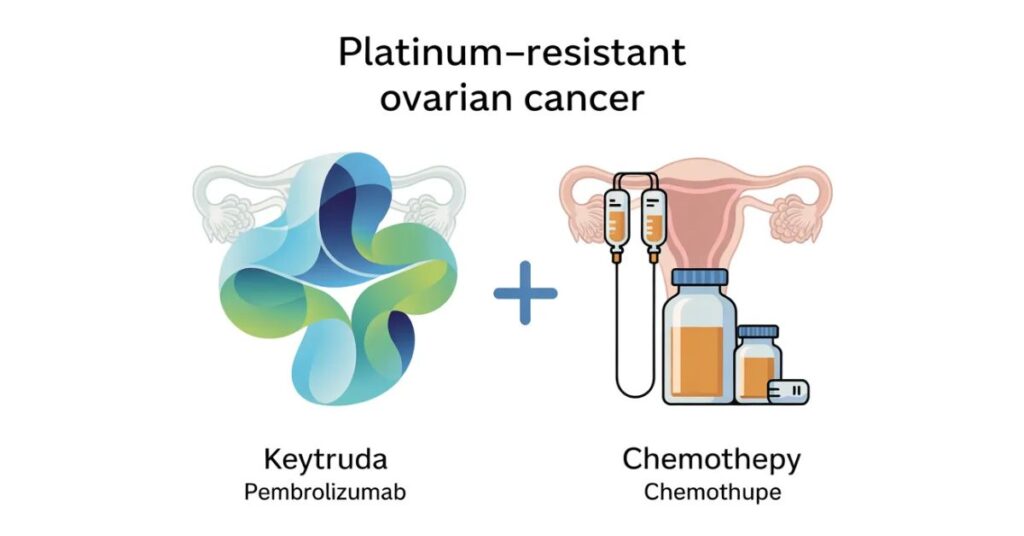
With a PDUFA date of February 20, 2026, the FDA evaluated pembrolizumab (Keytruda) in combination with paclitaxel with or without bevacizumab for platinum-resistant recurrent ovarian cancer. Phase 3 KEYNOTE-B96 trial data showed the regimen reduced the risk of disease progression or death by 30% compared to chemotherapy alone, with the benefit observed regardless of PD-L1 expression.
Platinum-resistant ovarian cancer disease that recurs within six months of platinum-based therapy has historically had very few effective treatment options. This authorization marks Keytruda’s entry into a new gynecologic oncology indication. Women with platinum-resistant recurrent ovarian cancer who have progressed on prior therapy may be candidates, with oncologists assessing performance status and treatment history as part of eligibility.
Why These FDA Approvals Matter
Collectively, February’s approvals address conditions affecting tens of millions of patients from highly common conditions like eczema and erectile dysfunction to rare pediatric diseases and treatment-resistant cancers. Several reflect genuinely meaningful advances: a once-weekly pediatric injection replacing a daily one, a monthly cancer infusion replacing a biweekly IV, and a new regimen for patients facing one of oncology’s most difficult diagnoses.
These approvals also reflect broader FDA priorities around rare diseases, pediatric conditions, and oncology areas that have received increased regulatory focus in recent years through programs like Breakthrough Therapy Designation and Priority Review. For patients in these categories, each new authorization can represent a turning point in their care.
How the FDA Drug Approval Process Works
The FDA approves new drugs after reviewing clinical trial evidence demonstrating both safety and efficacy. Manufacturers submit a New Drug Application (NDA) or Biologics License Application (BLA), and the FDA commits to a decision by a PDUFA date typically 10 months after filing, or 6 months for Priority Review designations. Before reaching patients, drugs progress through Phase 1 safety, Phase 2 dose-ranging, and Phase 3 large-scale efficacy trials, a process that commonly spans 10 to 15 years from initial discovery. For full details, visitFDA.gov’s Drug Review explainer.
What’s Coming Next: Drugs in the Pipeline
Several high-profile FDA decisions are expected in the coming months. Eli Lilly’s orforglipron, an oral GLP-1 receptor agonist for obesity and type 2 diabetes, is under accelerated review and could receive authorization as soon as March 2026, potentially reshaping the weight-loss drug market. Deucravacitinib (Sotyktu) for psoriatic arthritis and linerixibat for cholestatic pruritus in primary biliary cholangitis are both expected by late March.
In neurology, tolebrutinib, a potential first-in-class BTK inhibitor for non-relapsing secondary progressive multiple sclerosis is anticipated in the first half of 2026. April brings a decision on tividenofusp alfa, a potential first treatment for Hunter syndrome. With dozens of PDUFA dates scheduled through mid-2026, this is shaping up to be one of the most active regulatory years in recent memory.
Conclusion-FDA Approvals February 2026
FDA approval is the first step patient access then depends on commercial launch timelines, insurance formulary placement, and prior authorization. Most newly approved drugs reach pharmacies within weeks to a few months of authorization, though specialty biologics may take longer.
If you or a loved one may benefit from any of these treatments, the best next step is a conversation with your physician or specialist. They can assess your eligibility, review your history, and help navigate coverage. To stay current on FDA news, bookmark theFDA’s Novel Drug Approvals page for official announcements.
Sources: Drugs.com (FDA Approvals 2026), BioPharma Dive, HCPLive, OncLive, The Cardiology Advisor, FDA.gov

Marvi Channa is the author at DailyNewsHub.site, sharing breaking news, tech updates, sports highlights, and trending global stories with clarity and credibility. She’s passionate about timely reporting and keeping readers informed fast